This reminds me of the David Cronenberg film "eXistenZ"...
This incredible piece of scientific news yesterday comes from Stanford School of Medicine. The possibilities are mind-boggling.
Biological transistor enables computing within living cells, study says
BY ANDREW MYERS
When Charles Babbage prototyped the first computing machine in the 19th century, he imagined using mechanical gears and latches to control information. ENIAC, the first modern computer developed in the 1940s, used vacuum tubes and electricity. Today, computers use transistors made from highly engineered semiconducting materials to carry out their logical operations.
And now a team of Stanford University bioengineers has taken computing beyond mechanics and electronics into the living realm of biology. In a paper published March 28 in Science, the team details a biological transistor made from genetic material — DNA and RNA — in place of gears or electrons. The team calls its biological transistor the “transcriptor."
“Transcriptors are the key component behind amplifying genetic logic — akin to the transistor and electronics,” said Jerome Bonnet, PhD, a postdoctoral scholar in bioengineering and the paper’s lead author.
The creation of the transcriptor allows engineers to compute inside living cells to record, for instance, when cells have been exposed to certain external stimuli or environmental factors, or even to turn on and off cell reproduction as needed.
“Biological computers can be used to study and reprogram living systems, monitor environments and improve cellular therapeutics,” said Drew Endy, PhD, assistant professor of bioengineering and the paper’s senior author.
In electronics, a transistor controls the flow of electrons along a circuit. Similarly, in biologics, a transcriptor controls the flow of a specific protein, RNA polymerase, as it travels along a strand of DNA.
“We have repurposed a group of natural proteins, called integrases, to realize digital control over the flow of RNA polymerase along DNA, which in turn allowed us to engineer amplifying genetic logic,” said Endy.
Using transcriptors, the team has created what are known in electrical engineering as logic gates that can derive true-false answers to virtually any biochemical question that might be posed within a cell.
They refer to their transcriptor-based logic gates as “Boolean Integrase Logic,” or “BIL gates” for short.
Transcriptor-based gates alone do not constitute a computer, but they are the third and final component of a biological computer that could operate within individual living cells.
Despite their outward differences, all modern computers, from ENIAC to Apple, share three basic functions: storing, transmitting and performing logical operations on information.
Last year, Endy and his team made news in delivering the other two core components of a fully functional genetic computer. The first was a type of rewritable digital data storage within DNA. They also developed a mechanism for transmitting genetic information from cell to cell, a sort of biological Internet.
It all adds up to creating a computer inside a living cell.
Digital logic is often referred to as “Boolean logic,” after George Boole, the mathematician who proposed the system in 1854. Today, Boolean logic typically takes the form of 1s and 0s within a computer. Answer true, gate open; answer false, gate closed. Open. Closed. On. Off. 1. 0. It’s that basic. But it turns out that with just these simple tools and ways of thinking you can accomplish quite a lot.
“AND” and “OR” are just two of the most basic Boolean logic gates. An “AND” gate, for instance, is “true” when both of its inputs are true — when “a” and “b” are true. An “OR” gate, on the other hand, is true when either or both of its inputs are true.
In a biological setting, the possibilities for logic are as limitless as in electronics, Bonnet explained. “You could test whether a given cell had been exposed to any number of external stimuli — the presence of glucose and caffeine, for instance. BIL gates would allow you to make that determination and to store that information so you could easily identify those which had been exposed and which had not,” he said.
By the same token, you could tell the cell to start or stop reproducing if certain factors were present. And, by coupling BIL gates with the team’s biological Internet, it is possible to communicate genetic information from cell to cell to orchestrate the behavior of a group of cells.
“The potential applications are limited only by the imagination of the researcher,” said co-author Monica Ortiz, a PhD candidate in bioengineering who demonstrated autonomous cell-to-cell communication of DNA encoding various BIL gates.
To create transcriptors and logic gates, the team used carefully calibrated combinations of enzymes — the integrases mentioned earlier — that control the flow of RNA polymerase along strands of DNA. If this were electronics, DNA is the wire and RNA polymerase is the electron.
“The choice of enzymes is important,” Bonnet said. “We have been careful to select enzymes that function in bacteria, fungi, plants and animals, so that bio-computers can be engineered within a variety of organisms.”
On the technical side, the transcriptor achieves a key similarity between the biological transistor and its semiconducting cousin: signal amplification.
With transcriptors, a very small change in the expression of an integrase can create a very large change in the expression of any two other genes.
To understand the importance of amplification, consider that the transistor was first conceived as a way to replace expensive, inefficient and unreliable vacuum tubes in the amplification of telephone signals for transcontinental phone calls. Electrical signals traveling along wires get weaker the farther they travel, but if you put an amplifier every so often along the way, you can relay the signal across a great distance. The same would hold in biological systems as signals get transmitted among a group of cells.
“It is a concept similar to transistor radios,” said Pakpoom Subsoontorn, a PhD candidate in bioengineering and co-author of the study who developed theoretical models to predict the behavior of BIL gates. “Relatively weak radio waves traveling through the air can get amplified into sound.”
To bring the age of the biological computer to a much speedier reality, Endy and his team have contributed all of BIL gates to the public domain so that others can immediately harness and improve upon the tools.
“Most of biotechnology has not yet been imagined, let alone made true. By freely sharing important basic tools everyone can work better together,” Bonnet said.
The research was funded by the National Science Foundation and the Townshend Lamarre Foundation.
Information about Stanford’s Department of Bioengineering, which also supported the work, is available at http://bioengineering.stanford.edu. The department is jointly operated by the School of Engineering and the School of Medicine.
Original story at Stanford Medicine website:
http://med.stanford.edu/ism/2013/march/bil-gates.html
Showing posts with label science. Show all posts
Showing posts with label science. Show all posts
Friday, March 29, 2013

Friday, March 22, 2013
Older and Slower! Now With More Dark Matter!

(CNN) -- How cute was our universe as a baby? We now know better than ever: The picture of our early universe just got sharper and tells scientists with greater precision many important facts about how the universe evolved.
This new photogenic moment, released Thursday, comes courtesy of the European Space Agency's Planck space telescope, which detects cosmic microwave background radiation -- the light left over from the Big Bang. Scientists used data from Planck to create an artificially colored map of temperature variations across the sky in the early universe, in more detail than ever before.
"It's a big deal," said Charles Lawrence, Planck project scientist at NASA's Jet Propulsion Laboratory, in a news briefing. He added, "We can tie together a whole range of phenomena that couldn't be tied together so well before, and the sum total of that, the impact, is felt in many, many ways."
The light is technically from 380,000 years after the Big Bang, but that's still infancy when you consider that, according to the new data, the age of the universe is about 13.8 billion years.
"By the matching observations from Planck to predictions from models, we can assemble a surprisingly detailed picture of the universe as it was one nano-nano-nano-nanosecond after the Big Bang," said Marc Kamionkowski, professor of physics and astronomy at John Hopkins University.
Kamionkowski compared the Planck map to the Human Genome Project in terms of its importance for cosmology.
After analyzing the new data, scientists now believe that the universe is about 100 million years older than they thought.
The universe's light started out as a white hot glow and would have been blindingly bright if anyone had been around to see it, Lawrence said.
But since the Big Bang, that hot light has cooled significantly, and the universe itself has expanded by a factor of 1,100. The light has cooled so much that we can't see it, but Planck can detect subtle variations in temperature, which give scientists a wealth of information. By subtle, we mean about one-hundred-millionth of a degree.
The colors in the temperature map image that scientists released Thursday were arbitrarily chosen to show these intensity variations, Lawrence said. Red means a little bit warmer than average, blue means cooler than average, and white is average.
Planck data also suggest that our universe has more dark matter than previously thought. A full 26.8% appears to be dark matter, an invisible phenomenon that scientists have only been able to detect indirectly; experiments both in space and at the Large Hadron Collider are hoping to pin it down.
It appears that ordinary matter -- all of the stuff that we can see, such as planets and stars -- makes up only 4.9% of all the universe.
The rest of the universe is an even more mysterious phenomenon called dark energy, which has also never been detected and appears to be in less abundance than researchers thought.
Scientists said the rate at which the universe is expanding, based on these observations, is 67.15 kilometers per second per megaparsec, a unit of vast distance in space (1 megaparsec = 3.3 million light years). That's significantly less than what had been calculated previously (73.8 km/sec/Mpc). This number, known as the Hubble constant, describes the acceleration of the stretching of spacetime.
The discrepancy between these Hubble constants will likely attract a lot of attention in the scientific community and is one of the most exciting parts of the new data, said Martin White, a scientist with the Planck mission based at the University of California, Berkeley.
"The hope would be that this is actually pointing toward some deficiency in the models, or some extra physics that we're not aware of, and maybe spark a whole new research direction," White said.
One theory that could be explored is that the nature of dark energy, which scientists think is causing the accelerated expansion of the universe, is different from the simplest human-calculated models. Is dark energy increasing with time over some volume of space? That's a radical theory, though, White said, and there are other possibilities.
Another anomaly of these results is that temperature fluctuations are not uniform across the sky map. There are more variations in one direction than in another.
"Perhaps we could say that our universe has thrown us a curve ball, and it rarely fails to surprise us," said Krzysztof Gorski, Planck scientist at NASA's Jet Propulsion Laboratory.
Scientists ran 10 million computer simulations and chose from among them the best match to the new data, White said. Out of those, they found a good match describing important statistics about the universe.
The Planck telescope is aboard a spacecraft that launched in May 2009. It is not circling the Earth but orbits a point in the Sun-Earth system called the second Lagrange point.
The Planck mission helps to nail down many of the parameters that other experiments must know to explore aspects of the universe, such as its expansion history, White said.
New analyses are based on the first 15.5 months of data from this mission, which is run principally by the European Space Agency. NASA is a partner of the project.
Planck represents the third generation of attempts to map the cosmic microwave background. The first was COBE, launched in 1989, followed by WMAP, launched in 2001. Comparing the resulting maps shows just how much better the maps have gotten with each successive satellite.
"This is a beautiful illustration of how science works," Lawrence said. "Make a measurement, learn from it, make a better measurement, learn from it."
By Elizabeth Landau
http://www.cnn.com/2013/03/21/tech/innovation/universe-planck-map/index.html?hpt=hp_c3
Thursday, March 7, 2013
BEAUTY: Mixed Media--Klari Reis
Klari Reis' work looks like standard fare at an average science lab, but she uses a new media plastic called epoxy polymer to create these "cultures" in actual petri dishes for her current project, "Hypochondria." The epoxy polymers interact and collide with one another creating unpredictable reactions and designs that resemble microscopic cellular structures or bacteria. In fact, Reis uses organic cellular imagery from biotech companies in the San Francisco Bay Area as a model for her work. She is creating a petri dish every day of this year. See all of them at her blog, The Daily Dish, linked below.


http://www.klariart.com/
http://klarireis.blogspot.com/
http://www.klariart.com/
http://klarireis.blogspot.com/
Friday, February 15, 2013
Oh, hello there, 2012 DA14!
We (and by we, I mean the planet) did not even know of the existence of this asteroid until February 23, 2012 and now here we are being so intimate so quickly!
Today, February 15, 2013, the asteroid 2012 DA14 is passing us quite closely...a mere 17,200 miles from the surface of Earth which is a record close approach for a known object of this size. This is closer than satellites in geosynchronous orbit!


NASA is tracking the trajectory of 2012 DA14. Watch it live here:
http://www.ustream.tv/nasajpl2
http://www.nasa.gov/
Today, February 15, 2013, the asteroid 2012 DA14 is passing us quite closely...a mere 17,200 miles from the surface of Earth which is a record close approach for a known object of this size. This is closer than satellites in geosynchronous orbit!


Images from NASA/JPL
NASA is tracking the trajectory of 2012 DA14. Watch it live here:
http://www.ustream.tv/nasajpl2
http://www.nasa.gov/
Sunday, December 23, 2012
Friday, November 30, 2012
Portrait of DNA
Impressive science news: for the first time, DNA has been truly photographed. Italian scientist Enzo Di Fabrizio, physics professor at the Magna Graecia University in Catanzaro AND Head of the Nanostructures Department of the Italian Institute of Technology in Genoa (sheesh, what an overachiever...), and his team used a high-powered electron microscope to catch actual images of strands of DNA, the building blocks that support all life, suspended like a tightrope between two very small silicon structures. Truly breathtaking.


His published findings can be read on-line here!


His published findings can be read on-line here!
Friday, November 9, 2012
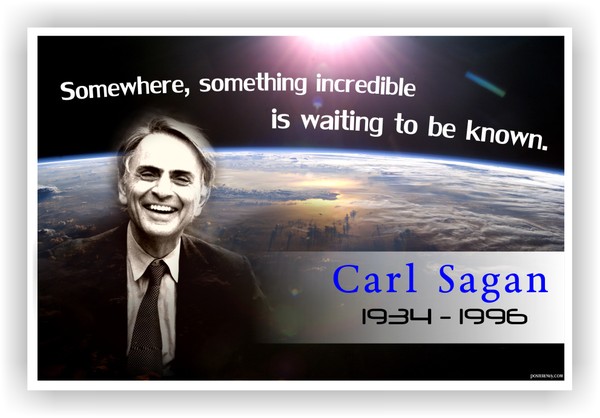
Happy Birthday, Carl!
Today would have been Carl Sagan's 78th birthday.
Happy birthday, Carl. Thank you for your mind, your work, and your legacy.


Happy birthday, Carl. Thank you for your mind, your work, and your legacy.


Sunday, November 4, 2012

Tuesday, October 9, 2012
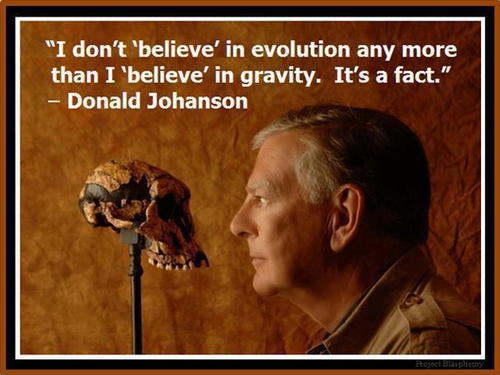
EVOLUTION
Because, in this day and age, we still have people, and in particular elected officials participating in the governing of this country, who deny facts and reality in favor of myth and fairy tales...



Monday, August 27, 2012
"Mama, Don't Let Your Babies Grow Up to Deny Evolution"
This is making the rounds on news sites, but it is worth posting here because Mr. Nye's message is so vitally important and true.
http://www.billnye.com/
http://bigthink.com/
http://www.billnye.com/
http://bigthink.com/
Sunday, August 12, 2012


Subscribe to:
Posts (Atom)